
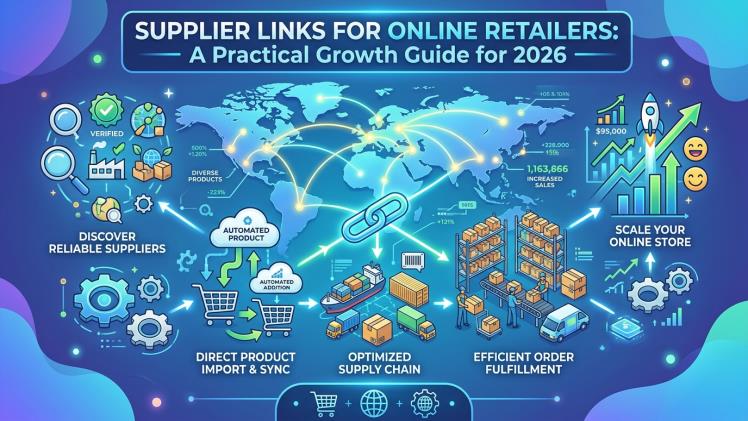
For an online retailer, a useful link can do more than help a page appear in search results. It can introduce products to shoppers, strengthen relationships with suppliers and direct customers to information they need. That makes supplier links for online retailers a practical part of a broader marketing plan, provided they are earned through real value rather than treated as a shortcut.
What makes a supplier link useful?
A supplier link is a reference from a manufacturer, wholesaler, distributor or business partner to a retailer’s website. It might appear on an approved stockist page, a product locator, a partner directory or an article explaining where a product is available. The strongest links make sense to the people reading the page: they help someone find a retailer, check a product or learn more.
Relevance matters more than simply collecting a large number of links. A mention from a supplier whose products you actually sell is likely to be more useful than a reference on an unrelated website. The surrounding page, the wording of the link and whether visitors can use it all help determine its practical value.
Start with existing supplier relationships
Retailers do not always need to begin by contacting strangers. Make a list of brands and distributors you already work with, then check whether their websites identify authorized stockists or retail partners. If your business is missing from a directory, ask the supplier what information it needs to add or update your listing.
Make the request easy to handle. Provide your store name, a concise description, the regions you serve and the relevant page on your site. Use a direct product or category URL when it genuinely helps a shopper, rather than automatically sending every partner to the homepage. Keep details current, especially if product availability or shipping areas change.
Give partners a reason to mention you
A supplier may be more inclined to feature a retailer that contributes something useful to the relationship. Consider creating a clear guide to choosing among a product range, a care and maintenance resource, or a comparison that explains which model suits different needs. Suppliers can share this material with customers if it is accurate, well presented and does not make claims they cannot support.
Other possibilities include supplying approved product photography, answering common customer questions or sharing feedback about recurring issues shoppers encounter. These contributions can lead to meaningful mentions, but they should be offered because they improve the partnership—not as an exchange for a particular link or ranking benefit.
Choose the right pages to support
Retailers often focus link-building efforts on their homepages, yet product and category pages may be closer to the shopper’s decision. A category page can help a customer compare options, while a product page can answer questions about specifications, sizing, compatibility or delivery. Before asking a supplier to link to one of these pages, make sure it is useful on its own and provides clear, up-to-date information.
There is more to planning this work than choosing a URL. Retailers need to consider which pages deserve attention, how partner mentions fit into a wider strategy and what makes product or category content worth sharing. This guide to ecommerce link building explores ways to approach backlinks to those pages.
Keep link requests professional
A short, specific message is usually better than a generic pitch. Explain your existing relationship, identify the page where a listing could help customers and suggest the most relevant destination on your website. Avoid asking for exact keyword-rich wording or promising a reciprocal link. Those demands can make a genuine business request feel transactional.
It is also important to avoid buying links or using automated outreach that promises rankings. Search engines and customers both benefit from links that reflect real recommendations and useful information. A supplier should be free to decide whether a listing is appropriate and how it is presented.
Measure results beyond rankings
Track where each partner mention appears and which page it points to. Look for referral visits, enquiries, product discovery and any change in the performance of the destination page over time. A link that sends a small number of well-matched visitors may be more valuable to a retailer than a prominent mention that attracts little relevant interest.
Review listings periodically. Remove or update inaccurate details, and check that links still lead to live pages. If a product is discontinued, a relevant category page or replacement product may be a better destination, subject to the supplier’s approval.
Bring in specialist help when needed
Smaller retailers may not have an in-house team to plan outreach, improve landing pages and monitor results. A freelancer can help with parts of this work, including research, content, analytics or freelance performance marketing. For a broader overview of freelance digital marketing and the work it can involve, read this introduction from Osdire, a marketplace where buyers can hire freelancers across marketing and other service categories.
Before hiring, define the task and agree on how success will be assessed. Ask for a clear scope, realistic timelines and examples relevant to retail. Whether work is handled internally or by a freelancer, the principle remains the same: build supplier relationships that help customers, and let links follow from that useful connection.